
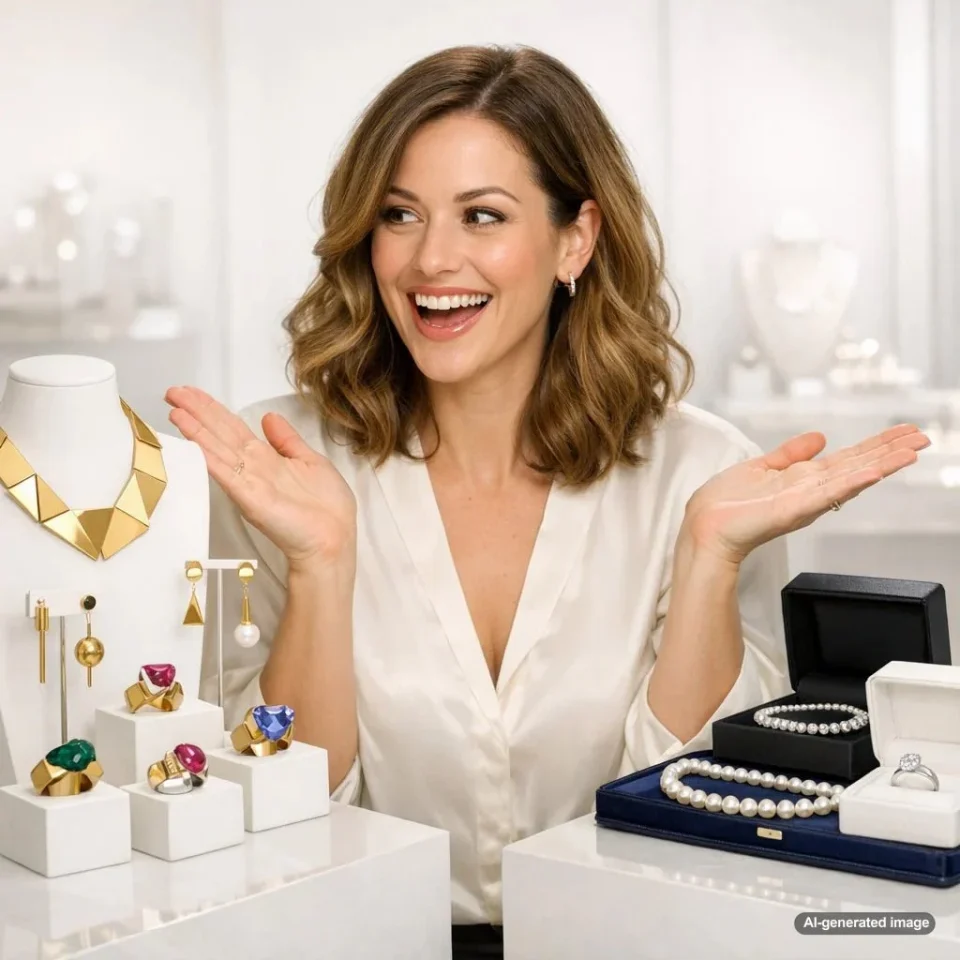
Executive style has quietly abandoned the rigid armor of past decades. The era of shoulder pads, stiff three-piece suits, and ostentatious power accessories has yielded to an aesthetic centered on precision, intentionality, and ease. Today’s professional wardrobe relies on sharp tailoring, elevated basics, and neutral palettes. In this refined sartorial landscape, jewelry is no longer a decorative afterthought or a loud status symbol. It serves as a subtle punctuation mark that pulls an entire look together.
Minimalist jewelry succeeds in the workplace because it operates on restraint. Rather than demanding attention, it commands respect through clean lines, high-grade metals, and exceptional proportions. For the professional navigating everything from high-stakes board presentations to cross-functional stand-ups, jewelry must convey competence without creating friction. Understanding how to select, style, and care for minimal pieces transforms a routine morning choice into an enduring strategic signature.
The Strategic Psychology of Restraint
Professional credibility is built on competence, but non-verbal presentation sets the initial tone. In shared office spaces, conference halls, and client meetings, visual distractions register instantly. Oversized chandelier earrings, stacks of clattering bangles, or blinding crystal clusters carry an emotional volume that often competes with the speaker’s ideas.
Minimalist jewelry shifts the focus back to where it belongs: your presence, your communication, and your expertise. Adorning the body with clean, understated pieces communicates deliberate curation. It signals that you value quality over excess and that your attention to detail extends to the smallest nuances of your personal presentation.
There is an innate confidence in under-embellishment. Wearing a single, perfectly balanced pendant or a pair of architectural gold huggies suggests that you have nothing to prove through superficial flash. This philosophy mirrors modern leadership itself, which increasingly favors clarity, poise, and thoughtful execution over performative bravado.
The Ergonomics of Modern Work
Jewelry that looks compelling in a jewelry tray often fails the physical reality of a standard workday. Modern professionals interact continuously with mechanical keyboards, touchscreens, headsets, and delicate textiles like merino wool and silk. In these environments, jewelry must be ergonomically sound.
Consider the auditory environment of an office. The rhythmic metallic tapping of loose charm bracelets or stacked cuffs against a glass desk or laptop trackpad is irritating during focused work sessions and distracting on microphone-enabled calls. True professional jewelry is sonically silent. It stays flush against the wrist or neck, allowing natural movement without acoustic disruption.
Physical interaction with clothing is equally vital. High-profile prong settings and intricate filigree are notorious for snagging fine knits, unravelling bespoke sweaters, or tearing silk linings. Minimalist pieces typically utilize low-profile settings, flush mounts, or smooth bezels that glide seamlessly against fabrics. They transition effortlessly under tailored blazer cuffs and over delicate collars, functioning as an integrated component of an ensemble rather than an obstacle.
Foundational Silhouettes for an Executive Capsule
Building a jewelry collection for the workplace requires the same discipline applied to building a capsule wardrobe. Instead of collecting seasonal novelties, focus on a core rotation of versatile silhouettes that harmonize across every outfit in your rotation.
Architectural Earrings and Micro-Huggies
The ear sits directly in the sightline of every conversational partner, making earrings the most impactful piece in your daily rotation. The goal is to frame the jawline and brighten the face without introducing movement that distracts during conversation.
-
Low-profile studs: Opt for bezel-set diamonds, moissanites, or brushed metal domes. Bezel settings encase the stone in a protective metal rim, offering modern geometric structure while eliminating snagging prongs.
-
Huggies with secure closures: A small, thick huggie earring in solid 14k gold hugs the lobe tightly, providing subtle warmth without dropping below the jawline.
-
Modern pearls: Move past traditional, formal strands in favor of single baroque studs or floating pearl drops on rigid posts. Their natural iridescence introduces softness against structured lapels.
Linear Necklaces and Low-Profile Pendants
A necklace in a professional setting should anchor the neckline of your shirt, knitwear, or blazer. The key metric here is chain gauge and pendant scale.
-
Fine box and snake chains: These weaves sit flat against the collarbone, catch the light with subtle fluidity, and resist tangling during long days.
-
Solitary geometric drops: A small horizontal bar, a brushed disk, or an understated bezel-set solitaire resting at the suprasternal notch creates a focal point that naturally directs visual attention toward your face.
-
Adjustable lengths: Investing in chains with adjustable extender loops allows a single pendant to sit appropriately whether you are wearing a crewneck cashmere top, an unbuttoned poplin collar, or a deep V-neck jacket.
The Unobtrusive Wrist
Wristwear requires the strictest adherence to comfort and functional design, particularly for anyone spending hours typing, drafting, or gesturing in presentations.
-
Contoured cuffs: A rigid, oval-shaped bangle or open cuff conforms to the natural anatomy of the wrist far better than a circular bracelet. It stays in place, avoids sliding down the forearm, and minimizes desk contact.
-
Delicate cable or paperclip chains: If you prefer fluid movement, select fine-gauge links that sit snugly against the skin. Pair these on the opposite wrist of your timepiece to preserve visual balance.
Low-Profile Bands and Structured Rings
Hand gestures play a major role in presentations and negotiations, drawing direct attention to fingers. Rings should look intentional rather than haphazardly assembled.
-
Brushed cigar bands: A flat or slightly domed band with a satin finish provides substantial presence without excessive height.
-
Flush-set and channel-set eternity bands: Stones set deep into the channel of the band offer continuous sparkle while keeping the surface smooth to the touch.
-
Stacked wire rings: Two or three ultra-slim bands worn together create visual texture while remaining lightweight enough to prevent hand fatigue.
Material Integrity: Why Composition Matters
Minimalist jewelry exposes craftsmanship. When an item features very little ornamentation, the eye immediately discerns the quality of the raw materials, the smoothness of the polish, and the precision of the joints. Cheap metals with superficial coatings wear down rapidly under daily contact with perfumes, lotions, and desk friction.
Solid gold remains the benchmark for everyday wear. While 18k and 24k gold offer rich yellow tones, they are comparatively soft and prone to surface gouges. 14k gold provides the optimal balance of rich color and structural durability, resisting scratches from daily office life. For white metal preferences, platinum and rhodium-plated sterling silver provide crisp, clean reflections, though platinum holds the edge for its density and hypoallergenic neutrality.
If budget considerations make solid gold impractical for an entire collection, select gold vermeil over standard flash-plated costume pieces. Authentic vermeil requires a sterling silver base coated in a thick layer of gold at least 2.5 microns deep. This construction prevents the base metal from showing through after a few months of wear and eliminates the greenish skin discoloration caused by cheap brass or copper alloys.
Texture is another subtle tool for individual expression. High-polish finishes provide a crisp, mirror-like gleam that reads formal and sharp. In contrast, satin, brushed, or sandblasted finishes diffuse light, offering a contemporary, architectural sensibility that pairs effortlessly with modern textiles like linen, raw silk, and matte wool.
Styling Across Professional Environments
How you combine minimalist pieces depends heavily on your industry’s culture, your meeting format, and the cut of your clothing.
Traditional and Conservative Environments
Finance, corporate law, and executive management still adhere to formal codes. In these spaces, jewelry should serve as an integrated component of an immaculate silhouette.
Rely on absolute symmetry and single focal points. Pair a structured watch with a matching pair of pearl or bezel-set studs. If you choose to wear a necklace, ensure it remains tucked neatly within the collar of your blouse or rests quietly against a dark sheath dress. Stick to a single metal tone across all pieces to maintain a crisp, uninterrupted visual line.
Creative, Tech, and Hybrid Workplaces
In design, technology, architecture, and progressive consulting, personal style is often welcomed as an indicator of creative thinking and modern sensibilities.
Here, minimalism can take on a more sculptural edge. Consider asymmetric styling, such as wearing a singular textured ear cuff alongside a classic huggie, or mixing warm yellow gold with cool white silver. Thick signet rings, squared-off bands, and organic hammered surfaces demonstrate a refined aesthetic awareness that feels both current and workplace-appropriate.
The Virtual Conference Room
Video calls flatten three-dimensional depth and compress detail, which changes how jewelry appears on screen. Intricate, tiny details often get lost or register as digital noise, while large pieces can overwhelm the small frame of a webcam.
For virtual meetings, select pieces with strong silhouettes and clean surfaces. A high-polish hoop or a substantial collar chain catches ambient ring lighting and defines your facial framing without creating distracting visual flicker. Keep earrings stationary; articulated chandelier drops can sway with head movements, pulling the viewer’s focus away from your presentation slides.
The Cost-per-Wear Framework
Building a fine jewelry collection requires capital, but adopting a cost-per-wear mindset clarifies its value. A statement necklace purchased for a gala might cost hundreds of dollars and see daylight twice a year. Conversely, a pair of pristine 14k gold huggies worn five days a week for five years delivers immense utility at pennies per wear.
Rather than buying seasonal impulse pieces that tarnish or fall out of fashion, invest deliberately in high-grade staples. A curated rotation of four to six exceptional items can anchor every professional ensemble you wear over the next decade.
Start with the piece closest to your daily routine—typically a resilient pair of earrings or an understated ring—and expand outward as you identify what best complements your professional silhouette. Over time, these pieces become more than simple accessories; they turn into personal signatures that project quiet authority, deliberate discernment, and timeless professional poise.
