
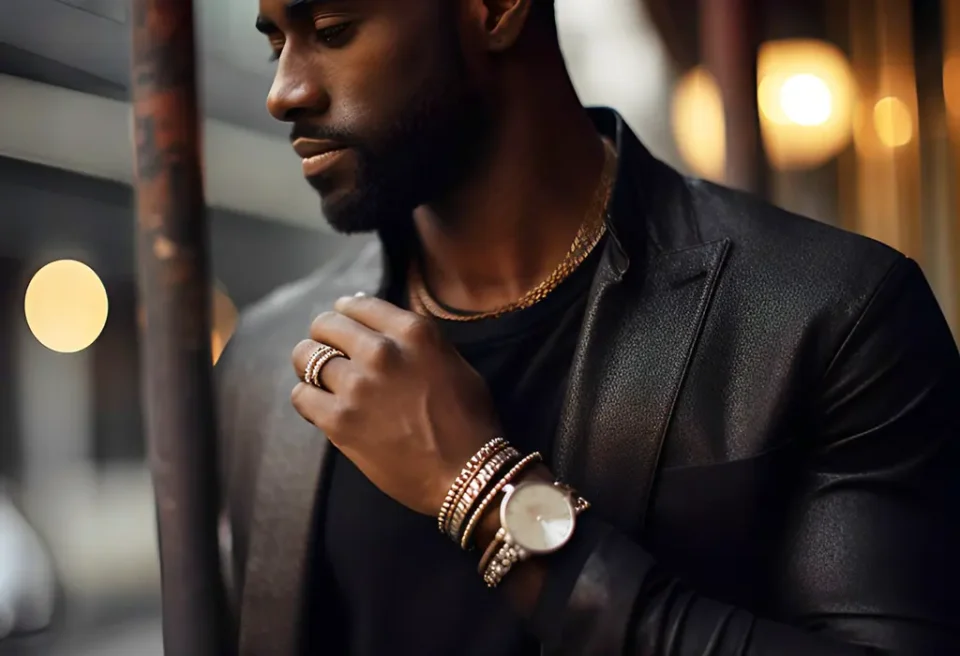
For generations, mainstream menswear confined jewelry to two utilitarian cornerstones: a plain wedding band and an understated wristwatch. Anything beyond those boundaries was often viewed with suspicion, relegated either to countercultural movements or dismissed as flamboyant excess. That rigid demarcation has vanished. Today, men have reclaimed jewelry as an essential instrument of self-expression, using metal, stone, and leather to bring depth, contrast, and tactile interest to everyday tailoring and relaxed silhouettes alike.
Wearing jewelry well is rarely about the volume of pieces you accumulate. Instead, it hinges on understanding visual weight, proportion, metal finishes, and personal context. When worn haphazardly, accessories can quickly look like an afterthought or a costume. When chosen with discernment, they transform an ordinary ensemble into a sharp, intentional personal statement. Mastering this discipline requires an eye for craftsmanship, an understanding of your own anatomy, and an appreciation for restraint.
Anchor Your Look with Proper Scale and Proportion
The single most common mistake men make when adopting jewelry is ignoring physical scale. A piece of jewelry does not exist in a vacuum; it lives against the topography of your hands, wrists, collarbone, and jawline. What appears balanced on a display stand can easily disappear against a broad frame or overpower a slender one.
Consider your wrist circumference when shopping for bracelets and cuffs. A slender wrist under six and a half inches can look swallowed up by a heavy, eight-millimeter curb chain or an oversized plate bracelet. Conversely, a broad, athletic wrist makes delicate wire bangles look fragile and out of place. The same principle applies to chains around the neck. A fine two-millimeter box chain rests quietly under an open camp collar, but it can look virtually invisible against a heavy wool overcoat or an athletic build.
Pay close attention to how accessories interact with your clothing silhouette. Voluminous clothing, such as heavyweight cardigans, raw denim, and structured leather jackets, demands jewelry with substantial presence, such as hammered silver bands, tactile cuffs, and heavier gauge links. Light summer fabrics like linen shirts and mercerized cotton tees require lighter, streamlined silhouettes that match the airy drape of the garment.
The Nuance of Metal Selection and Coordination
Color and tone form the bedrock of your jewelry aesthetic. While personal preference always plays a role, understanding how metals interact with your skin tone and your existing wardrobe prevents jarring visual friction.
Skin Undertones and Metal Profiles
Skin undertones fall broadly into warm, cool, and neutral categories. Cool undertones feature hints of blue, pink, or red beneath the surface, paired with veins that appear distinctly blue or purple in natural light. For these complexions, cool metals provide crisp clarity. Sterling silver, white gold, and brushed titanium reflect light without washing out your natural coloring.
Warm undertones carry yellow, peach, or golden casts, with veins that lean olive or green. Yellow gold in 14k or 18k alloys, warm bronze, and rich brass glow naturally against these skin profiles, adding warmth rather than competing with it. If you have neutral undertones, you have the flexibility to wear both palettes comfortably, though your clothing colors will generally dictate which metal creates the most cohesive harmony.
Breaking the Matchy-Matchy Trap
Decades of rigid fashion dogma insisted that all metals must match precisely. If your belt buckle was silver, your watch, rings, and collar pins were required to follow suit. While matching your metals remains a safe, fail-safe choice for black-tie galas and conservative boardrooms, everyday dressing benefits from a less mechanical approach.
Intentional metal mixing adds complexity and sophistication to an outfit. The key word is intentional. Rather than scattering random pieces across your body, create a unifying bridge. A two-tone timepiece that incorporates both stainless steel and gold can seamlessly anchor a yellow gold signet ring on one hand and a silver cuff on the other. Keep the finishes aligned: combine matte and brushed metals together, or keep polished surfaces in conversation with one another, so the differing tones feel harmonized by their texture.
Mastering the Core Categories
Building an enduring jewelry rotation does not require a sprawling collection. It requires a handful of exceptional, versatile pieces across the foundational categories.
Rings Beyond the Wedding Band
Your hands are constantly visible, whether you are typing on a keyboard, signing a document, or gesturing during conversation. Because rings draw immediate visual scrutiny, their placement and shape matter immensely.
-
Signet rings: Originally used to stamp family crests into wax seals, the modern signet ring is an enduring masculine staple. Worn primarily on the pinky or the ring finger of your non-dominant hand, a flat-faced signet in solid silver or gold adds heritage appeal without decorative clutter.
-
Minimalist bands: A simple four-to-six-millimeter band made of brushed sterling silver, tungsten, or yellow gold works effortlessly on the middle or index finger. It provides weight without the symbolic formality of a bridal band.
-
Balance across hands: Avoid crowding three rings onto your left hand while leaving your right hand entirely bare. Distribute the visual mass evenly. If you wear a wedding ring and a watch on your left arm, reserve your right hand for a signet or an accent ring to keep your profile balanced.
Chains and Necklaces: Length, Drape, and Gauge
A chain around the neck should complement your shirt collar, not fight with it. The length of the necklace determines where the eye settles, while the chain weave dictates its visual formality.
-
The 20-inch chain: This length typically falls just past the collarbone, landing squarely at the top of the sternum. It is the most versatile dimension for menswear. It stays hidden neatly under a button-up shirt closed to the collar, yet peaks through naturally when you unfasten the top two buttons.
-
The 22-inch to 24-inch chain: Falling lower onto the chest, this length is ideal for supporting pendants or worn over the top of a crewneck sweater or heavyweight tee.
-
Weave styles: Stick to classic architectures. Curb, box, and Figaro chains offer structural rigidity and lie flat against the skin. Avoid overly elaborate or delicate weaves that twist easily or catch on chest hair and knit fibers.
Bracelets and the Wrist Architecture
The wrist is already prime real estate for a timepiece, which means bracelets must work around or alongside that focal point.
-
The open cuff: An open cuff made from sterling silver, forged iron, or brass is the easiest way to wear wrist jewelry. Because it has no clasp, it retains a clean, continuous line and hugs the wrist bone tightly, ensuring it does not slide uncomfortably down your forearm.
-
Chain link bracelets: A modest curb or ID bracelet adds vintage military flair. If worn on the same wrist as your watch, ensure the bracelet does not feature harsh, abrasive edges that could scratch your watch case.
-
Beaded and leather options: If you choose organic materials, steer clear of mass-market, multi-colored wooden beads that evoke vacation souvenirs. Instead, look for matte black onyx, weathered obsidian, or flat bridle leather that deepens in character over time.
Dressing for the Setting
Context dictates the parameters of personal adornment. What looks sharp at an evening cocktail lounge can easily read as tone-deaf in a corporate negotiation.
In professional, white-collar settings, jewelry should whisper. A pristine dress watch, a subtle ring with a low profile, and perhaps a pair of architectural cufflinks are plenty. The goal is to project refinement, meticulous grooming, and authority without creating acoustic distractions, such as bracelets clacking against a desk during a presentation.
In smart-casual and weekend settings, you can afford to introduce texture and layered pieces. An unbuttoned linen overshirt welcomes a twenty-inch silver chain paired with a small geometric pendant. A pair of well-worn denim and a suede jacket provides the perfect canvas for a patina-rich signet ring and a heavy wrist cuff.
Prioritizing Material Integrity
Cheap jewelry is an expensive habit. Flash-plated brass, hollow links, and mystery alloys may look passable in an online catalog, but they deteriorate swiftly under real-world conditions. Sweat, skin acidity, and daily friction quickly strip away thin coatings, exposing greenish undertones that stain the skin and leave the jewelry looking dull and cheap.
Invest in enduring base materials. Solid 925 sterling silver offers an unbeatable combination of weight, affordability, and aging potential. It acquires micro-scratches and oxidation over years of wear, developing a unique personal patina that looks better with age.
If your budget leans toward gold, prioritize solid 14k gold over high-karat alternatives for everyday wear. While 18k and 24k gold boast radiant yellow hues, their softness leaves them vulnerable to dents, bending, and deep gouges under everyday stress. For entry-level pieces that resist water, gym sessions, and travel without requiring maintenance, 316L marine-grade stainless steel provides a reliable, scratch-resistant alternative that will not tarnish or discolor your skin.
The Power of the Final Edit
When you finish dressing, look in a full-length mirror and evaluate your jewelry as part of the total picture. Your accessories should complement your silhouette, not scream over it. If your eye is drawn immediately to a bright chain, then jumps to a flashing watch, and then gets stuck on multiple ornate rings, you have created visual static.
Remove one piece. Let a single item take the lead, whether it is an heirloom watch, a heavyweight cuff, or an exceptional signet ring. Allow everything else to play a supporting, harmonizing role. True style is not about showcasing everything you own at the same time; it is about having the confidence to let thoughtful, well-chosen details speak quietly for themselves.
